
Widespread Application of Prefabricated Heavy Steel Buildings
2025-11-26
With the continuous advancement of energy-saving industry policies in China, prefabricated heavy steel buildings have gradually gained acceptance. As green, environmentally friendly, and energy-efficient structures, prefabricated heavy steel buildings are reshaping people’s residential concepts. But is heavy steel construction only suitable for villas? What are its development trends?
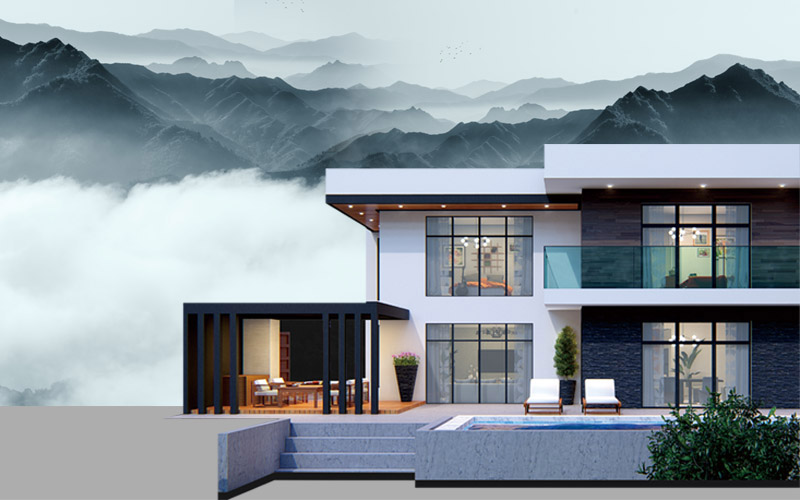
Do you know about prefabricated heavy steel buildings?
Prefabricated heavy steel buildings are an innovative structural construction method, primarily using national standard H-section steel as the building framework, which is assembled through rigorous structural calculations.
【Exterior Advantages】: Prefabricated heavy steel buildings adopt national standard H-section steel as the main keel. As we all know, steel’s ductility is significantly superior to that of concrete. Many aesthetically designed architectural plans cannot be realized or achieved with traditional red bricks, but heavy steel villas can accomplish this effortlessly.
【Interior Advantages】: Leveraging its inherent material properties, prefabricated heavy steel buildings prioritize the comfort of modern residences and utilize various new materials to meet user demands. For example, Villas by Dujia (a reference to high-quality heavy steel villa projects) adopt advanced high-strength composite solid wall panels. These panels deliver exceptional thermal insulation and soundproofing performance.
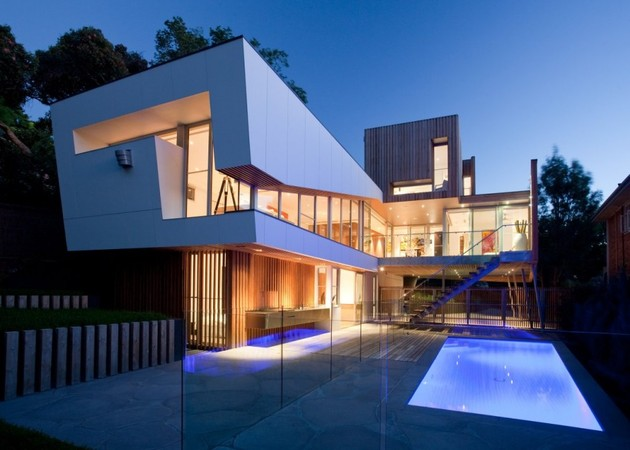
Application Fields of Heavy Steel Villas
Thanks to the characteristics of its materials, prefabricated heavy steel buildings outperform traditional brick-concrete structures in both external design flexibility and internal comfort. They can be easily designed with more exquisite and unique shapes, avoiding the monotonous appearance of conventional villas and enabling personalized comfortable interior styles. In developed countries such as the United States, Japan, and Australia, prefabricated heavy steel building systems have long been widely used in general industrial, agricultural, commercial, and service-oriented buildings—including office buildings, villas, recreational clubs, tourist facilities, and low-to-medium-rise residential buildings. They are also suitable for old building renovation, expansion, reinforcement, as well as construction in areas with scarce building materials, inconvenient transportation, or tight construction schedules, and for movable/relocatable structures. Additionally, they offer three core advantages: fire resistance, water resistance, and environmental friendliness, making them highly favored by customers.
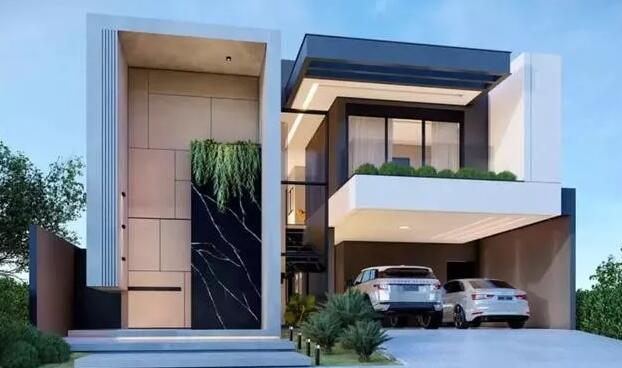
Xinzhijiang keeps pace with the times, insights into customer needs, and has developed hybrid light-heavy steel structure villas. Addressing the residential demands of modern society, we provide three major solution systems: health and wellness towns, village renovation, and single-household development. Our offerings include diverse design styles such as Chinese courtyard, European palace, American style, and modern minimalist, catering to the needs of high-end real estate, hotels, homestays, agritourism projects, beautiful countryside initiatives, and scenic areas—aligning perfectly with market development trends.
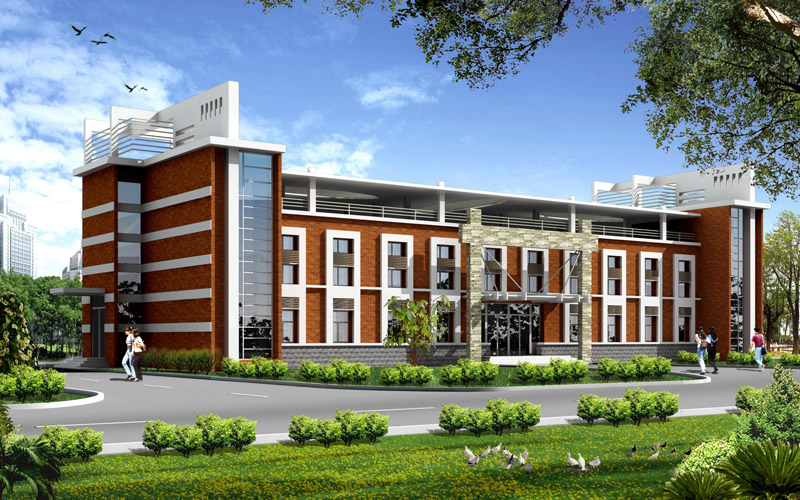
Development Trends of Heavy Steel Villas
With the successive introduction of development plans and policy guidelines by the Chinese government and industry authorities, more than 20 provinces and municipalities nationwide have launched supportive policies to promote the development of the prefabricated construction industry, vigorously advancing industrial bases and pilot demonstration projects. Meanwhile, driven by technological progress and improved management capabilities, prefabricated heavy steel buildings are poised to occupy a broad market with immense potential.
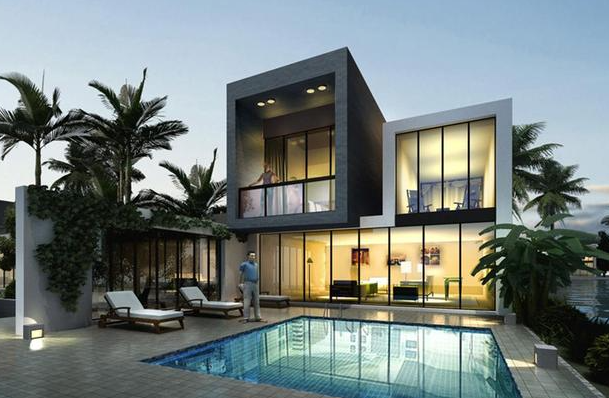
Currently, China’s prefabricated heavy steel construction industry is developing rapidly, exhibiting four key trends:
1:Standardized Production
Driven by green and low-carbon requirements, mature construction technologies, and positive government guidance, prefabricated heavy steel buildings are gradually improving their technical systems. Focusing on "greenization" as the core goal, "industrialization" as the production method, "intelligentization" as the service function, and general contracting as the implementation carrier, they aim to achieve "energy conservation, efficiency improvement, quality enhancement, and safety assurance" throughout the steel structure construction process.
2:Diversified Functions
Prefabricated heavy steel buildings extensively adopt on-site assembly, significantly reducing traditional cast-in-place work. This improves production efficiency and saves costs, with key advantages including:
Energy efficiency and superior soundproofing: The tight sealing performance of walls and doors/windows effectively blocks external noise.
Fire and seismic resistance: High-quality materials provide a safe and comfortable living environment. The structure is less prone to fire in dry conditions, and unlike traditional buildings, it does not develop cracks or discoloration with long-term use. In the event of an earthquake, its robustness prevents building collapse.
3:Informationized Management
Digital management relies on BIM (Building Information Modeling) and smart community digital management platforms. Prefabricated heavy steel buildings integrate full-cycle informatization and intelligent operation and maintenance, aiming to liberate productivity and drive rapid industrial development. In the future, this will bring increasingly higher efficiency and economic benefits to enterprises.
4:Gradually Reducing Costs
The additional cost of prefabricated heavy steel buildings mainly stems from precast components. Taking prefabricated reinforced concrete structures as a reference, calculations for a public rental housing project show that the incremental cost of prefabricated construction is approximately 695 yuan/㎡, with a price difference of up to 1,435 yuan/㎡ compared to traditional methods. Component costs can be divided into variable costs and costs reducible through large-scale production—primarily including molds, labor, and management fees, which account for about 58% of total costs and can be effectively reduced via industrialized mass production. With the vigorous promotion of prefabricated buildings, standardization rates will rise significantly, enabling enterprises to fully utilize internal resources and realize economies of scale. In the future, the construction cost of prefabricated heavy steel buildings will be far lower than that of traditional cast-in-place structures.
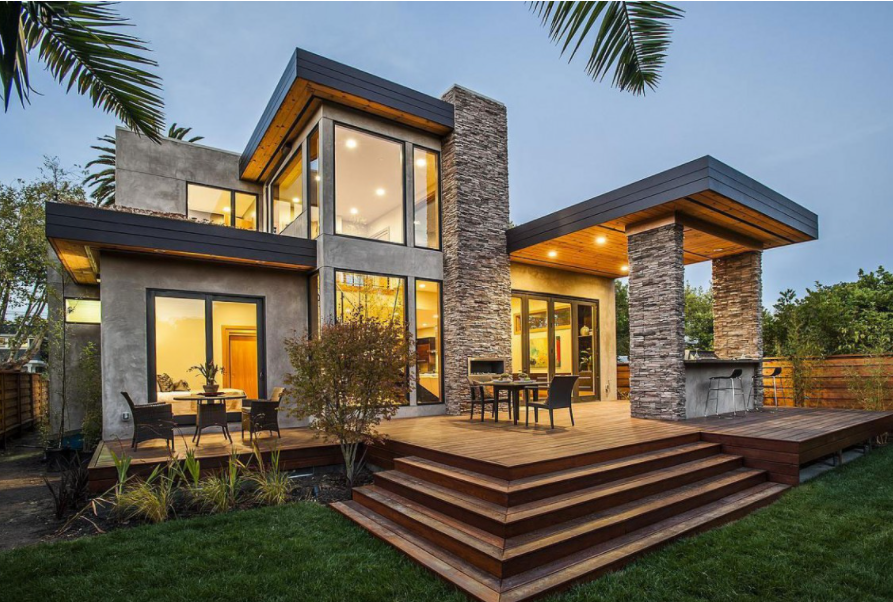
Currently, prefabricated heavy steel buildings account for a relatively low proportion of China’s construction market, leaving enormous room for growth. In the future, they will unlock a trillion-yuan-scale green building market.